Standort: Taufkirchen bei München
Planerteam: Gerner Gerner plus
Typus: Quartier, Platz
Zeitraum: 2024
Größe: ca. 15.000 m²
Taufkirchen Swamp – Bahnhofsvorplatz
Taufkirchen verbindet seit jeher Stadt und Land: die Nähe zu München, eine gute Verkehrsanbindung und die naturnahe Lage am Perlacher Forst. Aus dieser Mischung aus urban und rural entwickelt sich das Konzept.
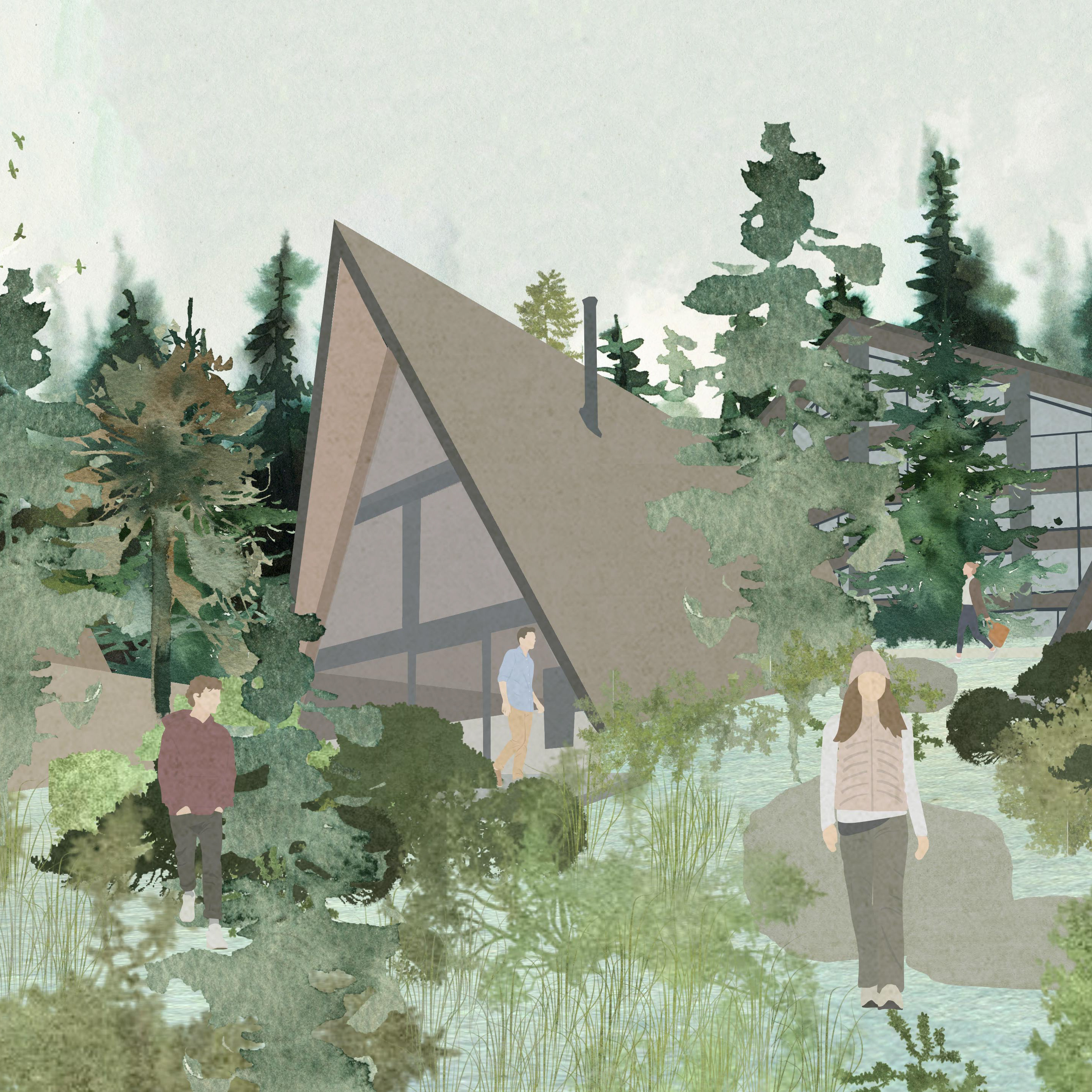
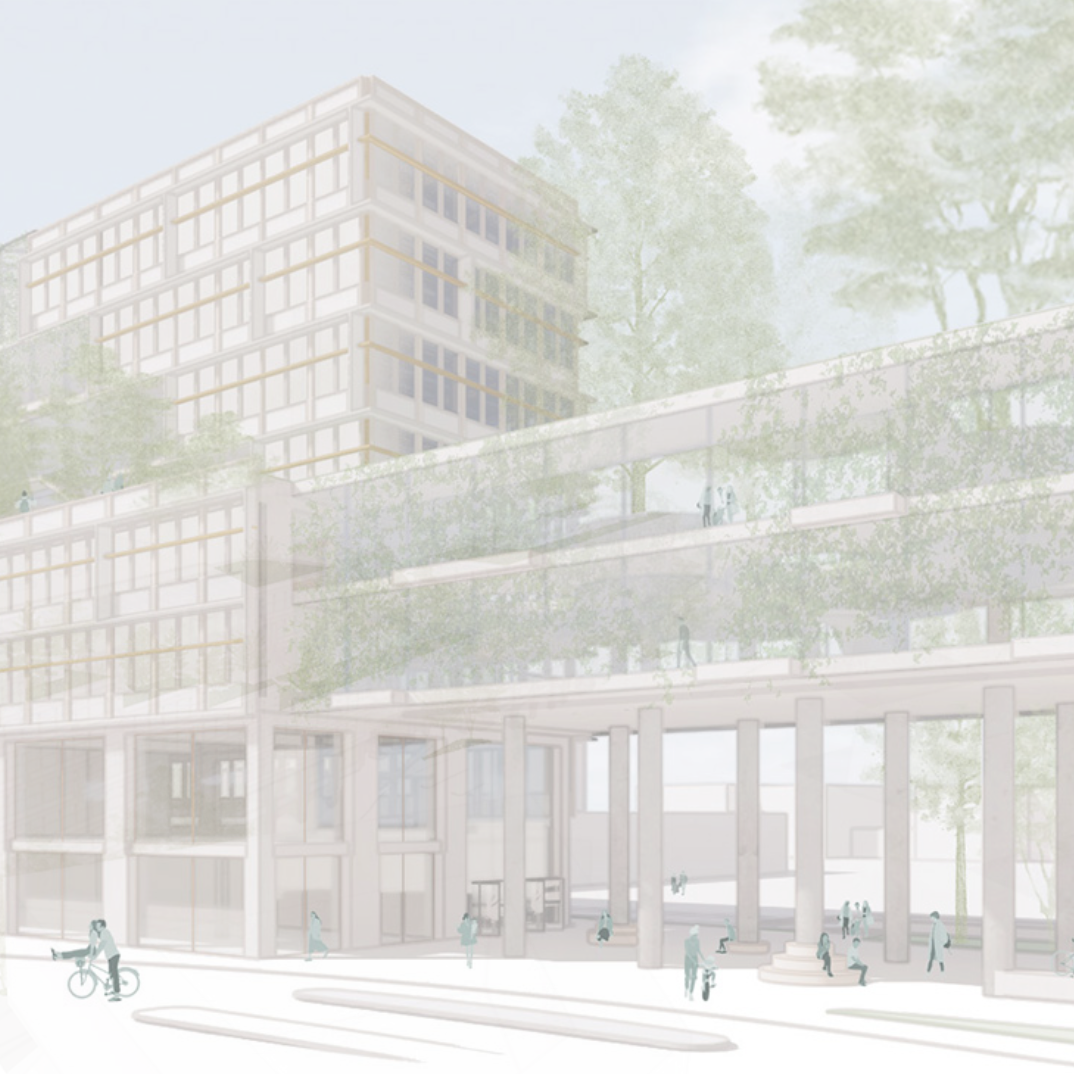
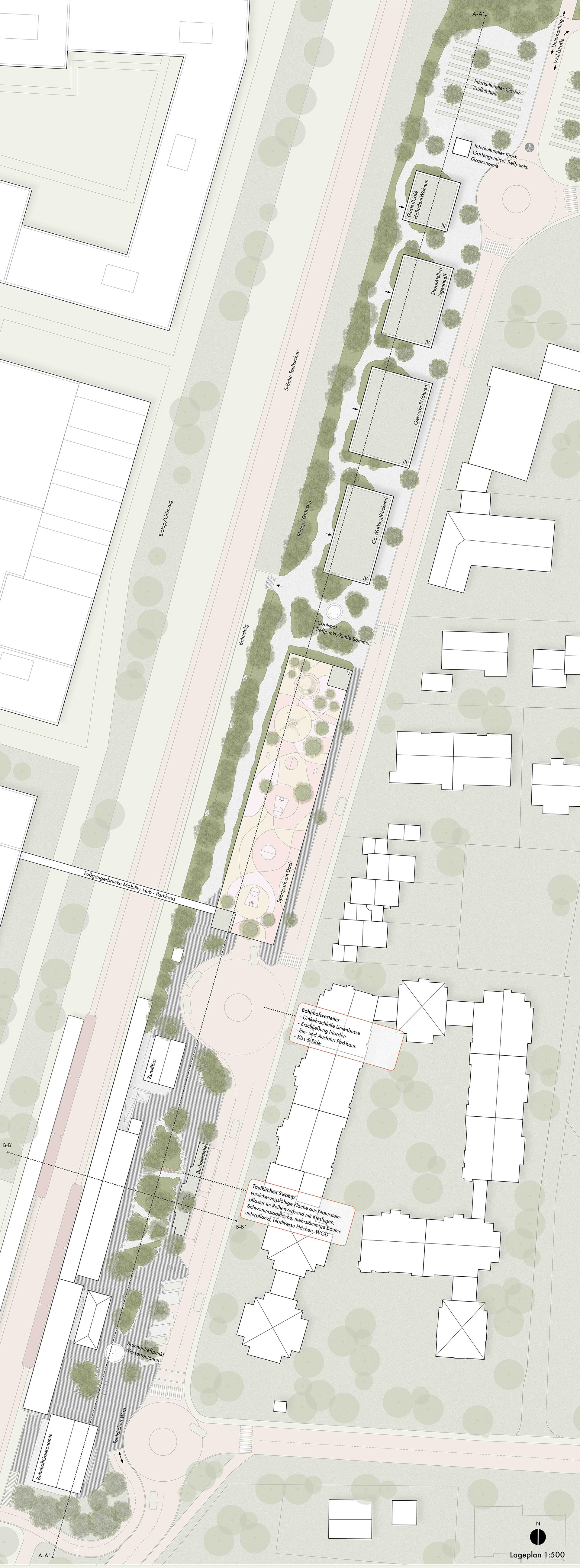
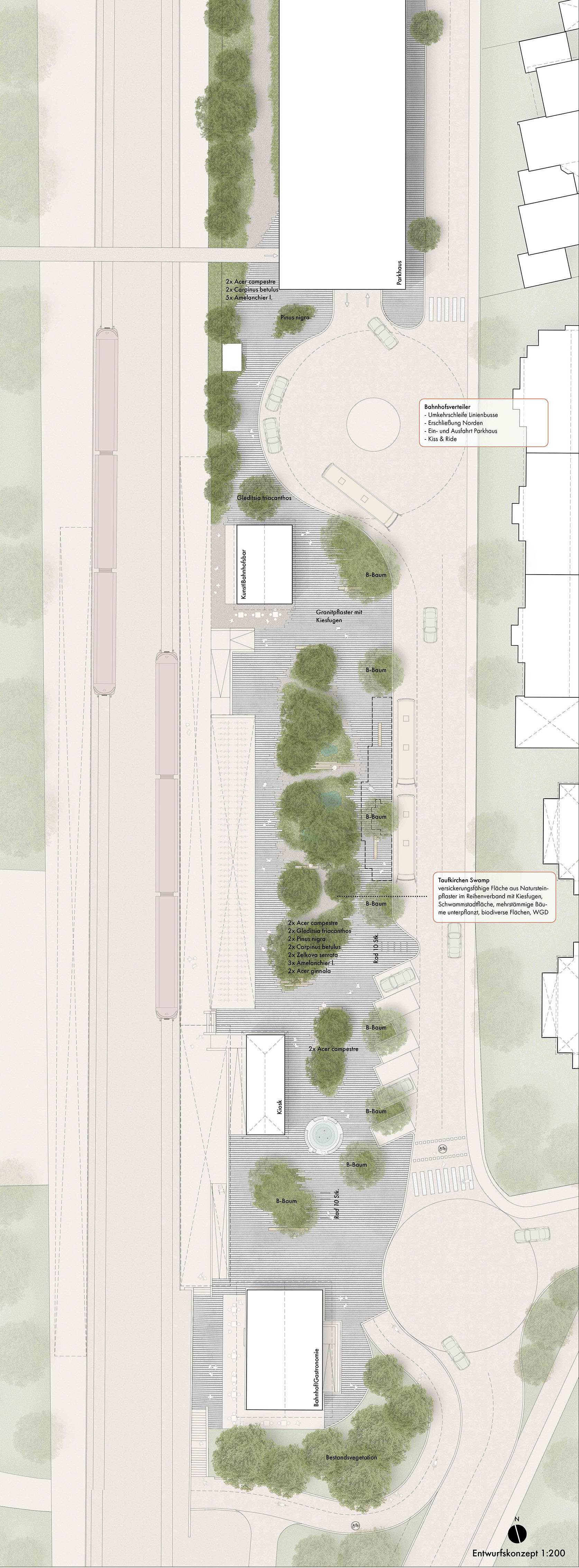
Städtebaulich setzt ein Grünzug westlich des Bahnhofs den Rahmen – er begleitet die S-Bahnlinie München-Holzkirchen und verläuft bis zur Waldstraße. Das Gebäudeensemble am Vorplatz wird in Form von Punkthäusern Richtung Waldstraße weitergefädelt und lässt Freiraum für Kaltluftschneisen. Ein Parkhaus verbindet als Mobility Hub den westlichen und östlichen Teil des Areals und bündelt die Verkehrsströme; auf seinem Dach entsteht ein Sport- und Spielpark. Nördlich verbinden Punkthäuser Gewerbe und Wohnen – Co-Working, Bäckerei, Ateliers, Jugendtreff und ein Interkultureller Garten mit Hofladen.
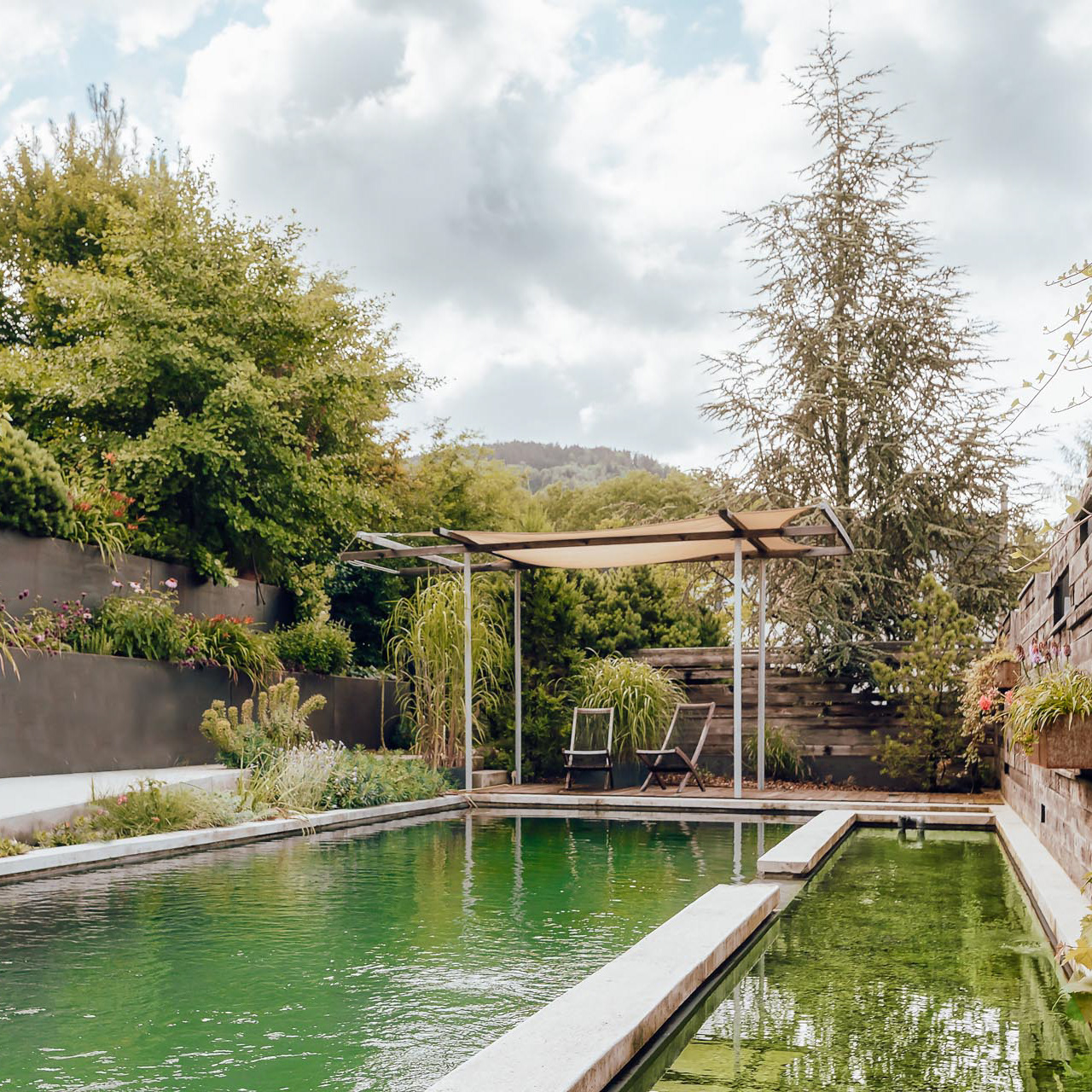
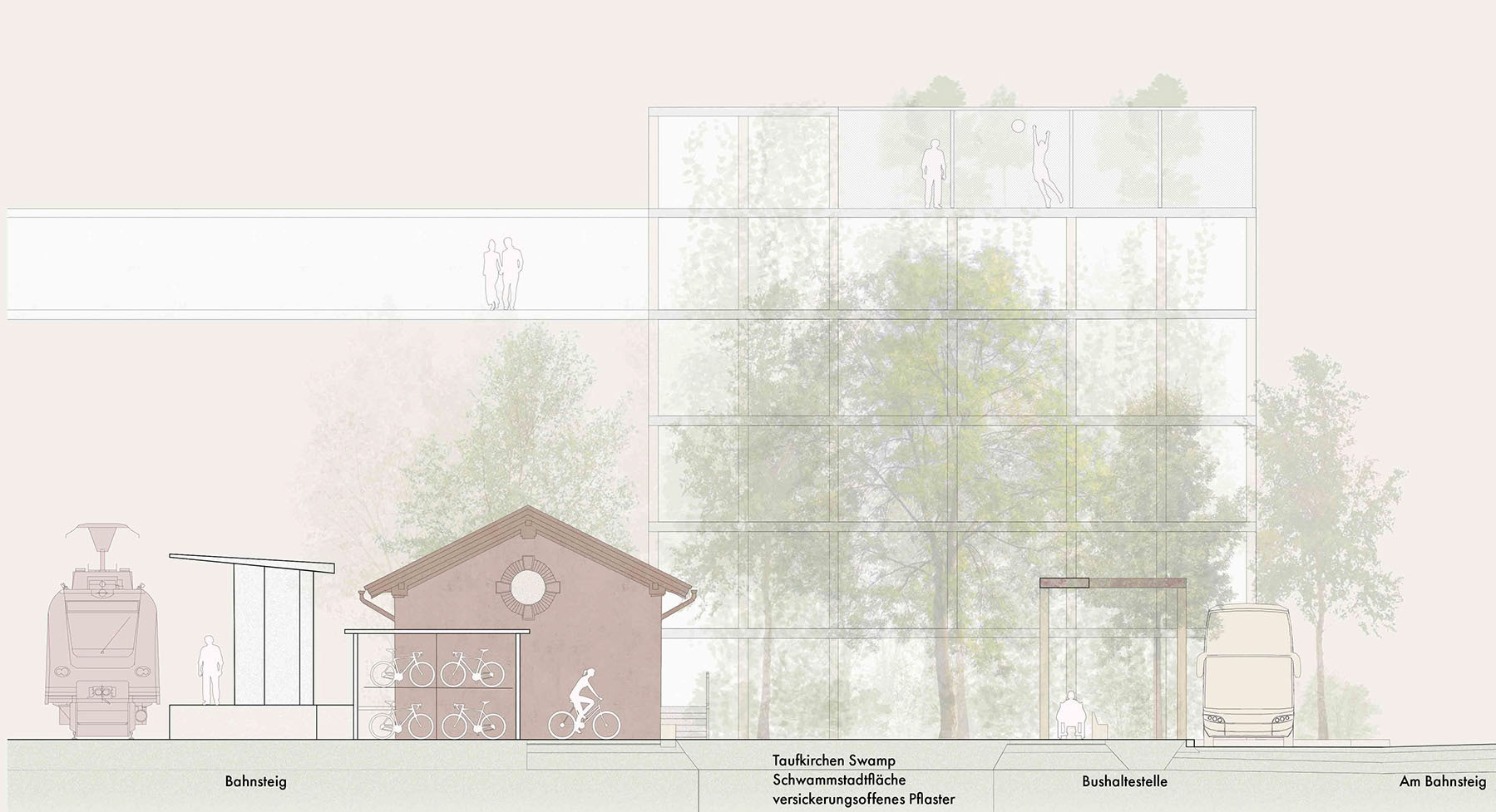
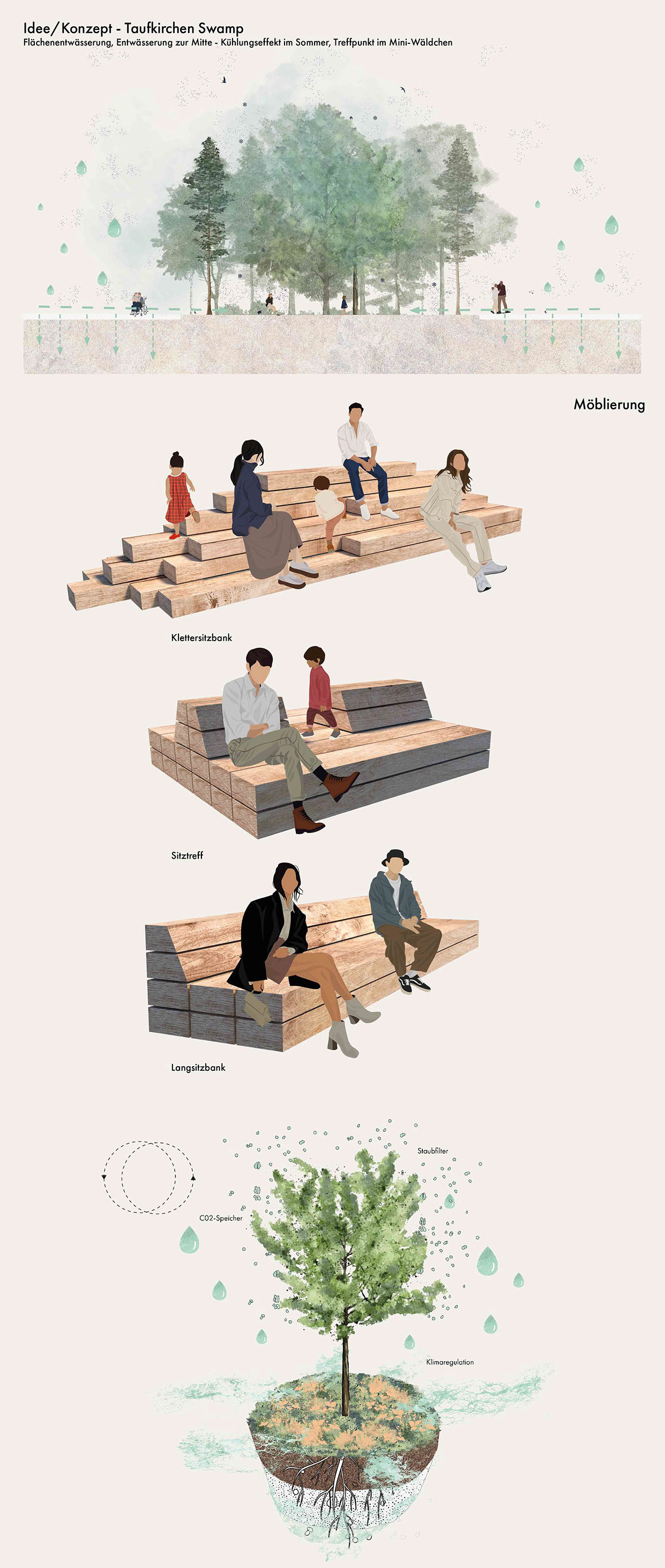
Im Zentrum nimmt sich der Vorplatz selbst das Feuchtgebiet zum Vorbild. Als Antwort auf die Klimaerwärmung wird der „Swamp" zum Prinzip: Wasser wird großflächig gespeichert, in Vegetationszonen und offenen Kies- und Pflasterflächen zurückgehalten und über Verdunstung an die Umgebung zurückgegeben – ein Platz, der sich selbst kühlt.
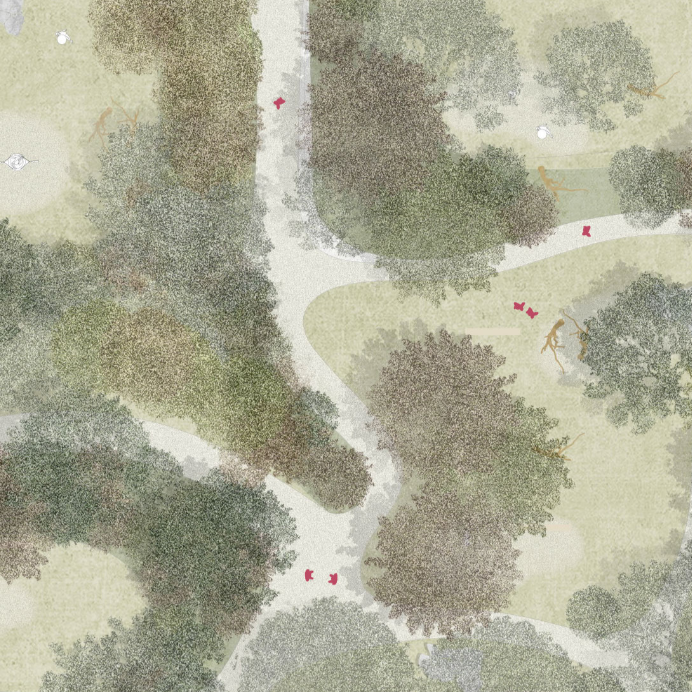
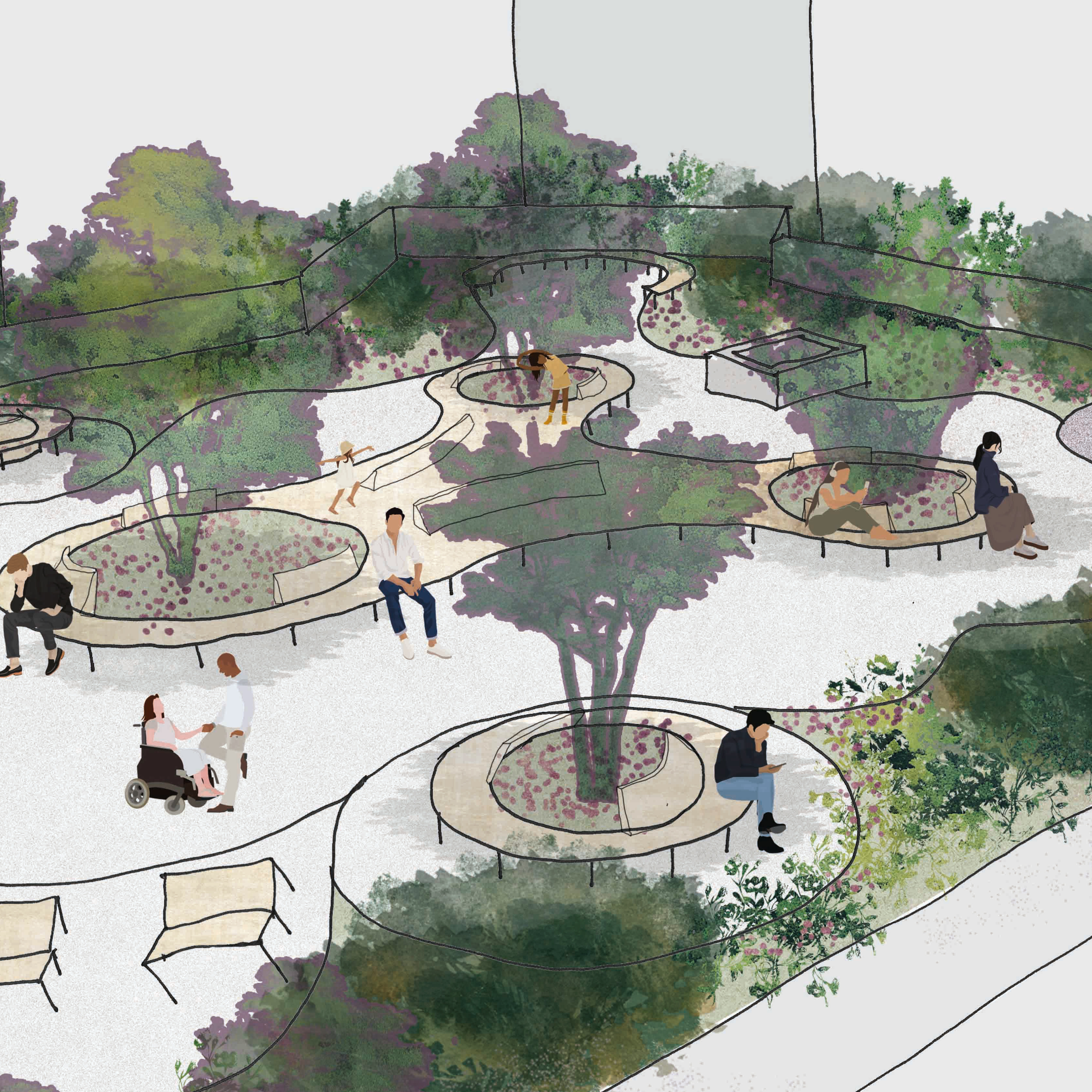
Die Entwässerung führt nach innen, zu tiefergelegenen Flächen. Bestandsbäume bleiben erhalten und geben die Standorte vor, ergänzt durch Neupflanzungen, Wildstaudengräser, Kräuter und Wildblumenwiesen. So entsteht ein biodiverser Lebensraum mitten am Bahnhof.
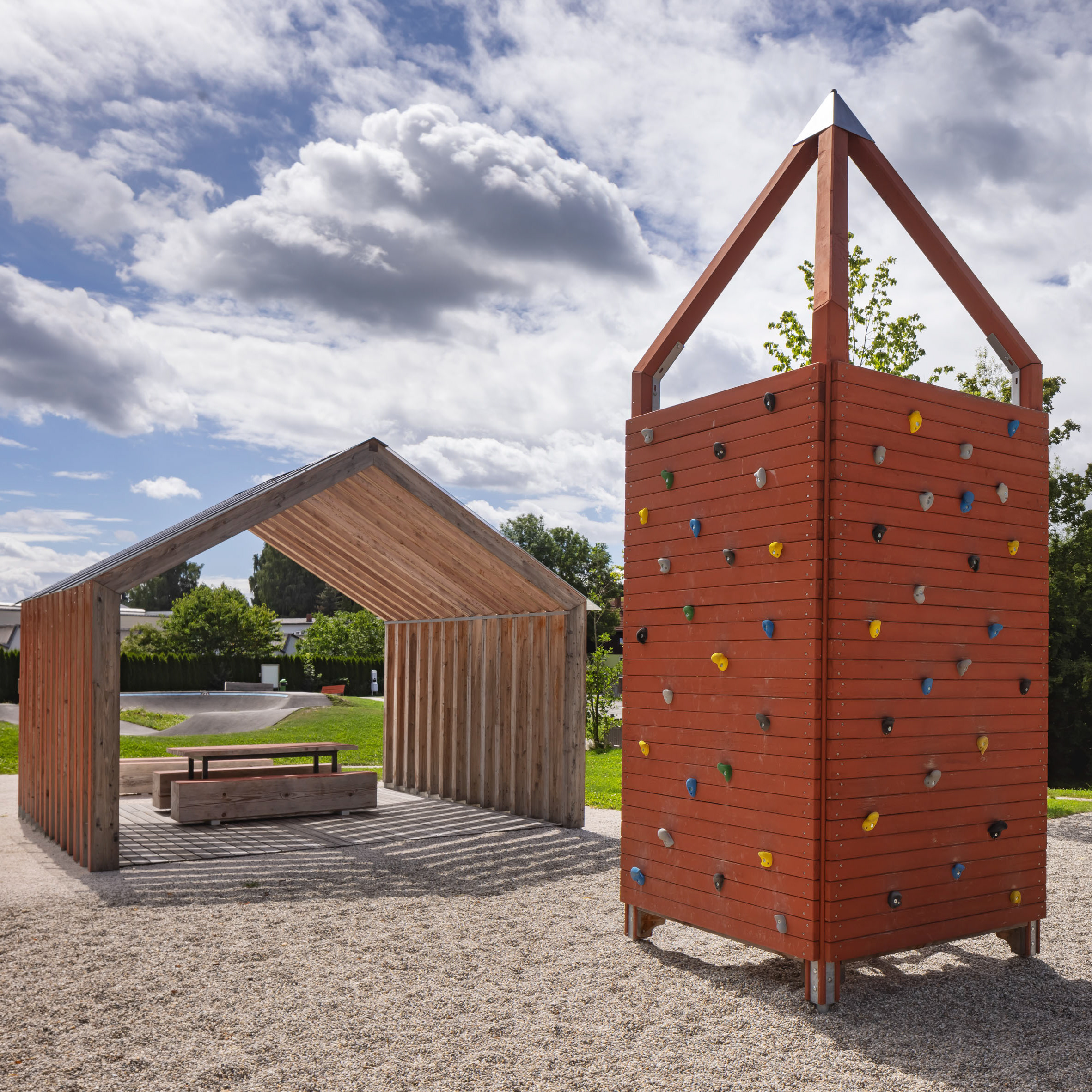
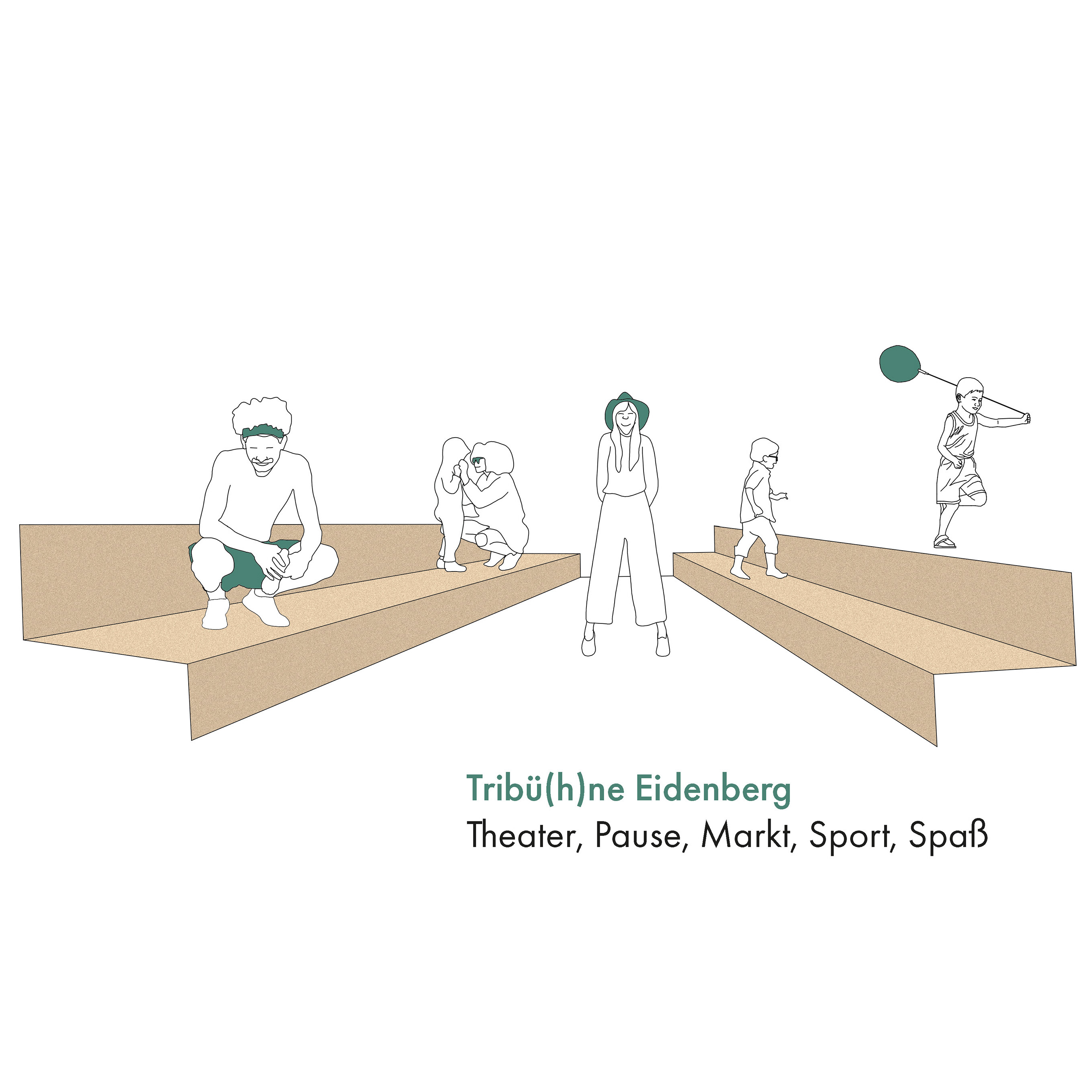
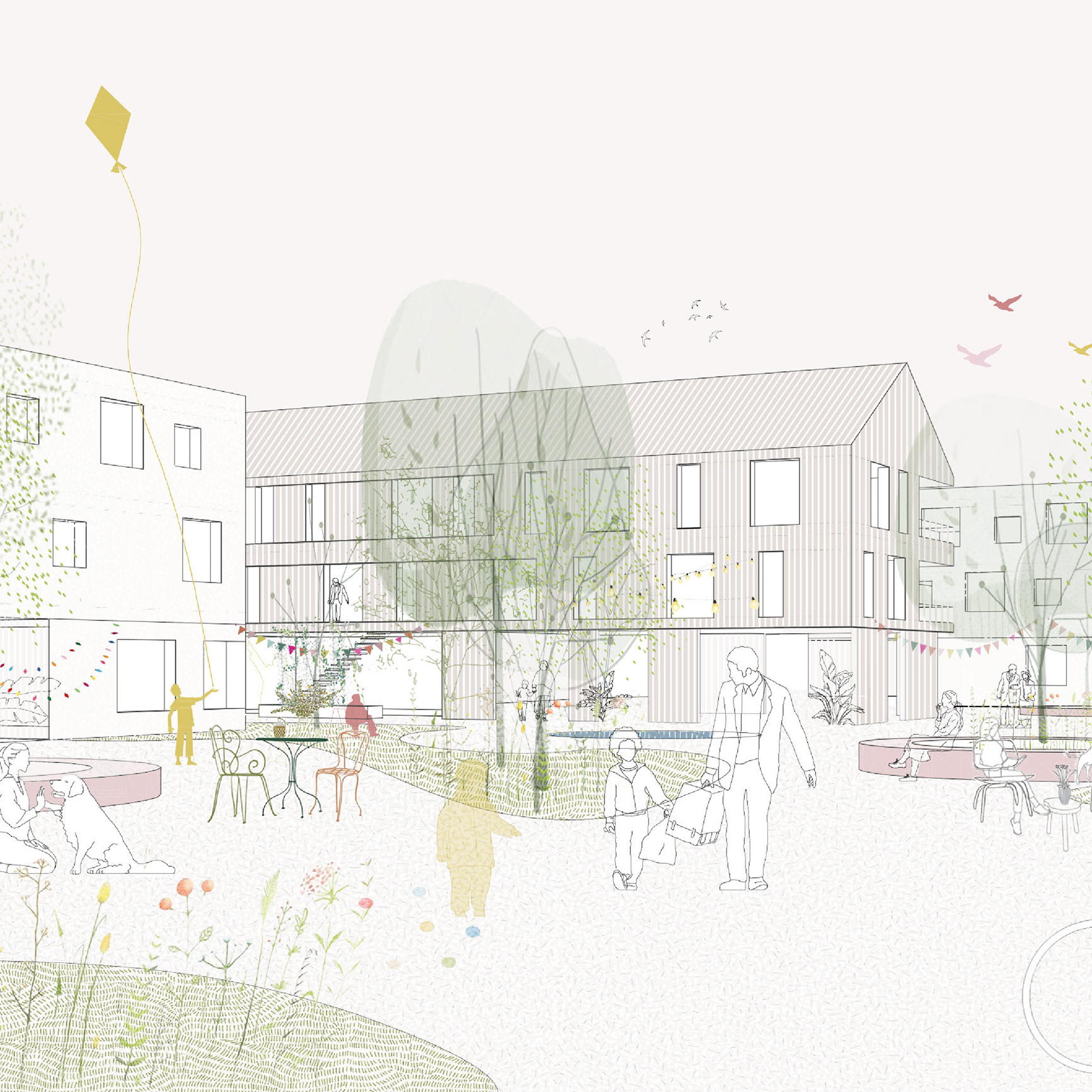
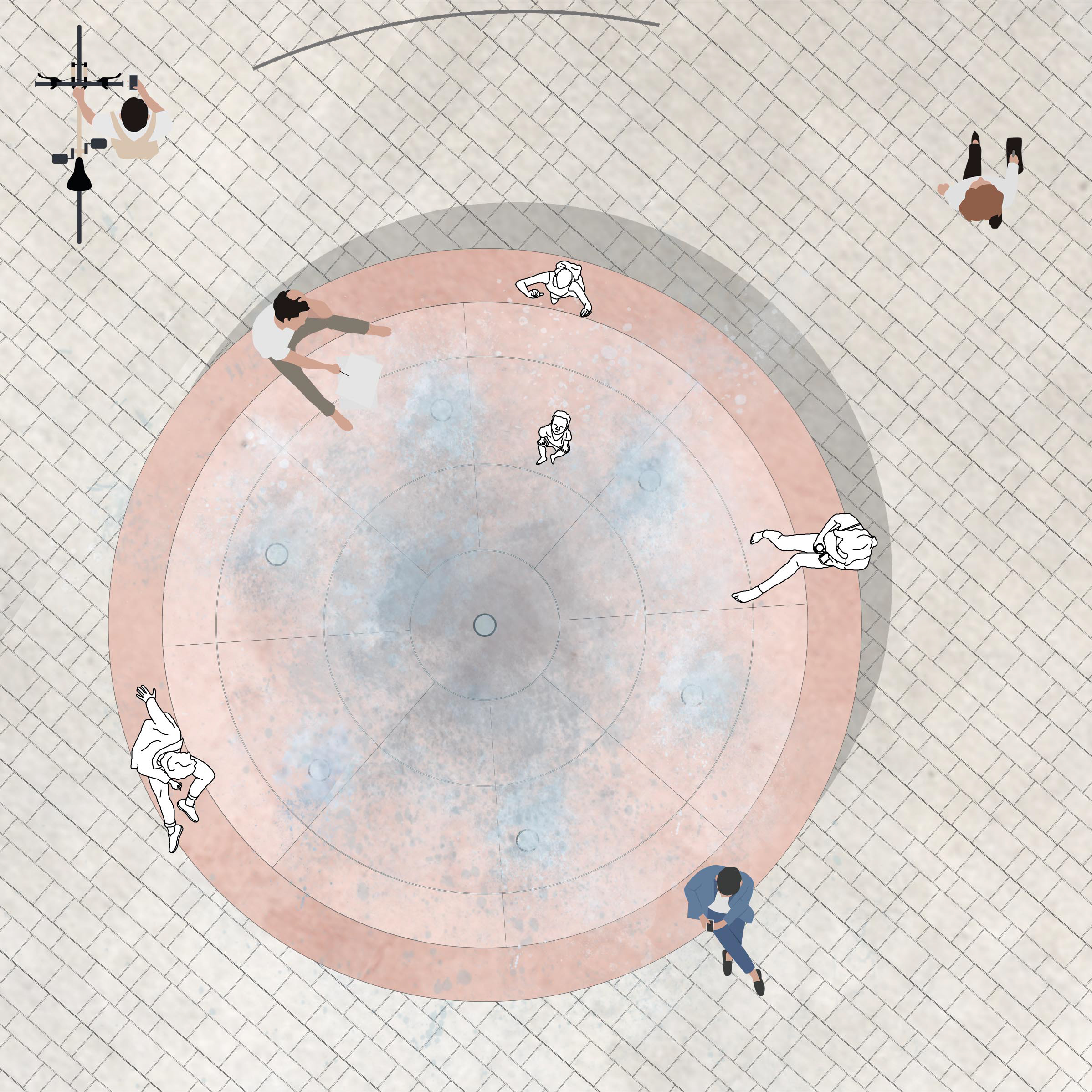
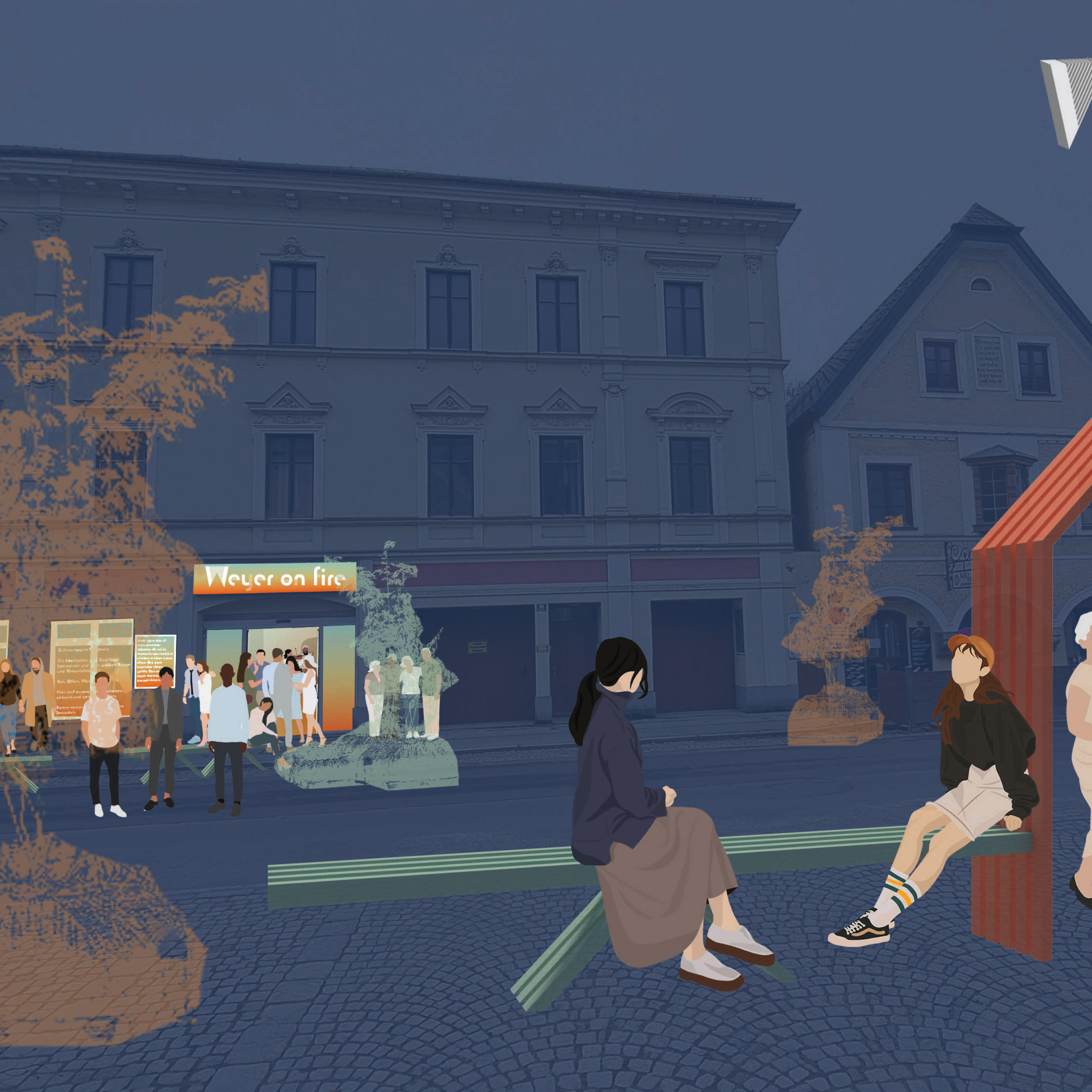
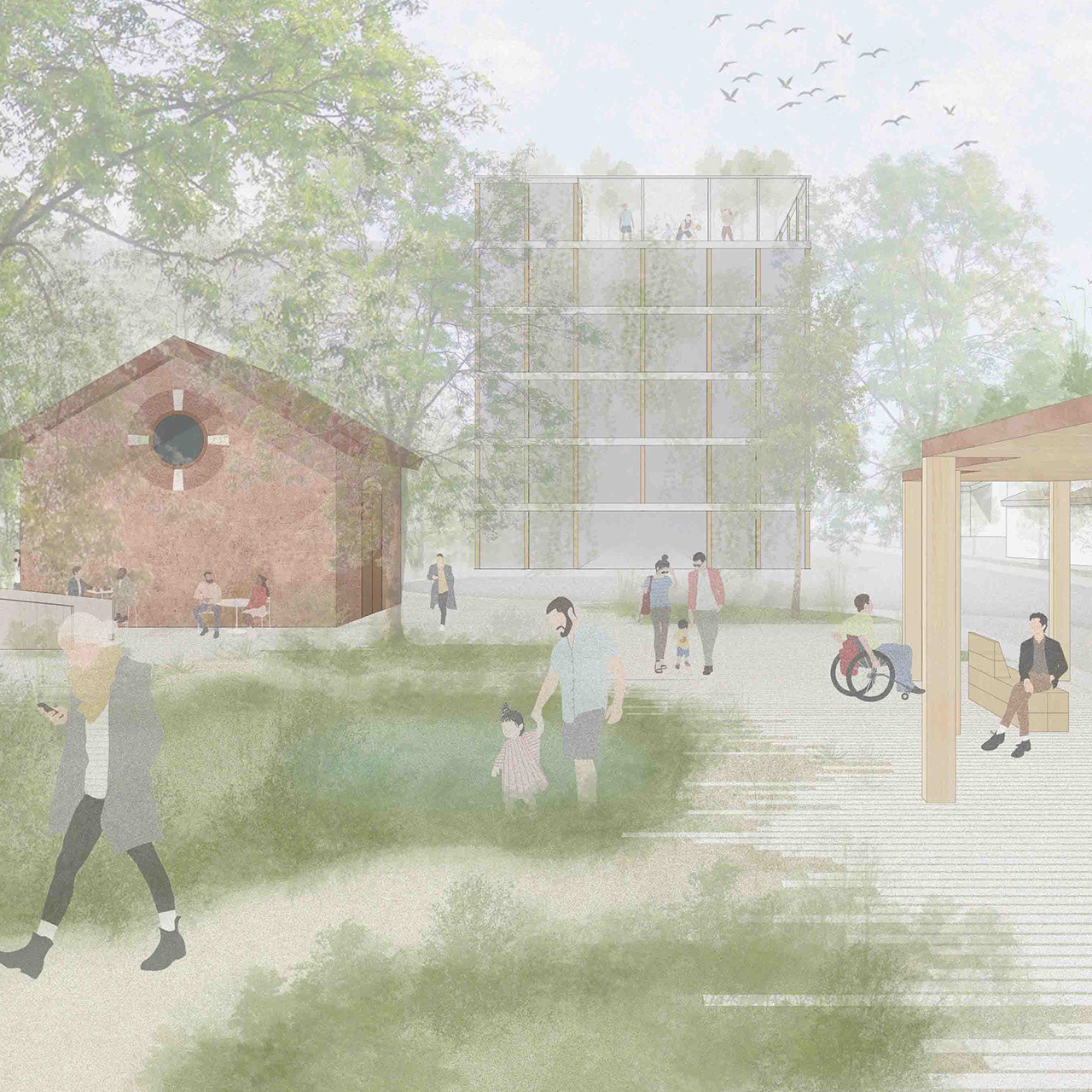
Zugleich ist der Vorplatz Kommunikationsraum: Er verbindet den Bahnhof mit den neuen und bestehenden Stadtteilen zu einem zentralen Treffpunkt. Ein Fontänenbrunnen wird an heißen Tagen zur Anlaufstelle, großzügige Sitzanlagen aus Holz laden zum Verweilen, ihre Kletterbänke werden für Kinder zum Spielgerät.
Taufkirchen Swamp – Station Forecourt
Taufkirchen has always connected town and country: the proximity to Munich, good transport links, and the near-natural setting at the Perlacher Forst. The concept develops out of this mixture of urban and rural.
In urban-planning terms, a green corridor to the west of the station sets the framework — it accompanies the Munich–Holzkirchen suburban railway line and runs to Waldstraße. The building ensemble at the forecourt is threaded onward towards Waldstraße in the form of point blocks, leaving open space for cold-air corridors. A car park, as a mobility hub, connects the western and eastern parts of the site and bundles the traffic flows; on its roof, a sports and play park emerges. To the north, point blocks combine commerce and housing — co-working, a bakery, ateliers, a youth meeting point, and an intercultural garden with a farm shop.
At the centre, the forecourt itself takes the wetland as its model. As a response to climate warming, the "swamp" becomes the principle: water is stored across large areas, retained in vegetation zones and open gravel and paved surfaces, and returned to the surroundings through evaporation — a square that cools itself.
The drainage leads inward, towards lower-lying areas. Existing trees are retained and determine the planting locations, complemented by new plantings, wild perennial grasses, herbs, and wildflower meadows. In this way, a biodiverse habitat emerges in the very middle of the station.
At the same time, the forecourt is a space of communication: it connects the station with the new and existing districts to form a central meeting point. A jet fountain becomes a destination on hot days, generous wooden seating installations invite people to linger, and their climbing benches become play equipment for children.