AuftraggeberIn: ambient consult
Planerteam: ambient consult
Standort: Lunz am See
Typus: Platz, Öffentlicher Raum
Zeitraum: 2019-2021
Größe: ca. 11.500 m²
Fotos: Christian Pichlkastner
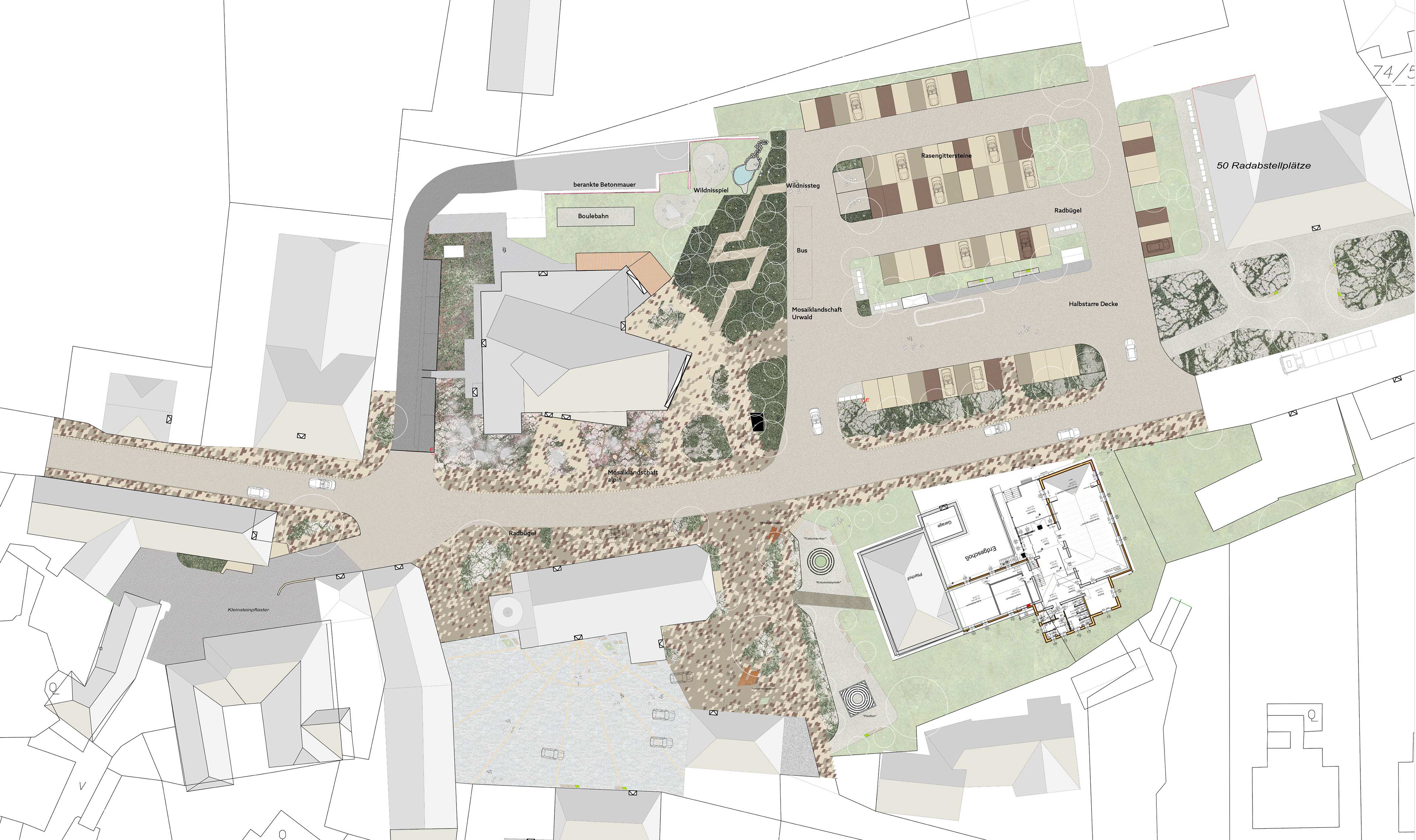
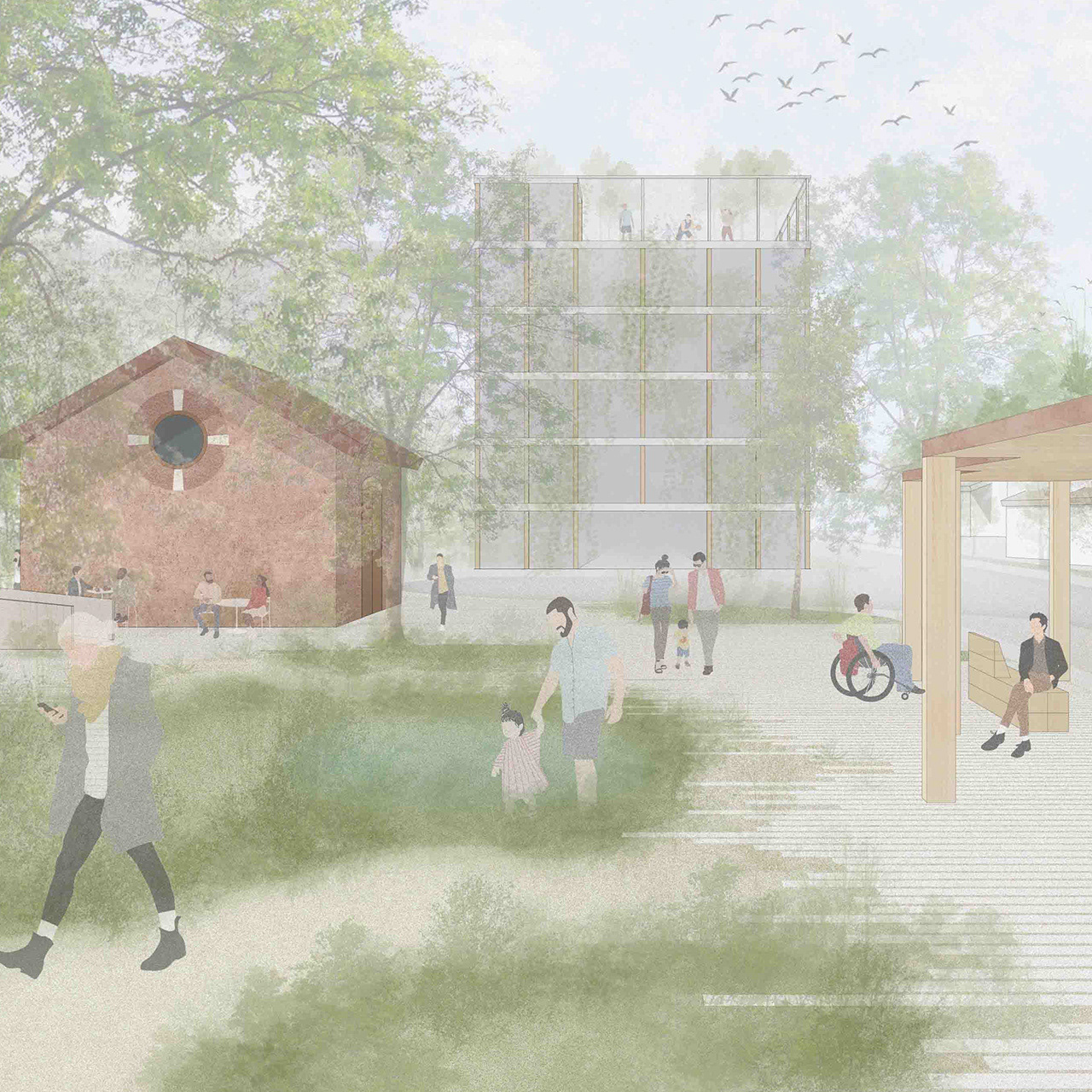
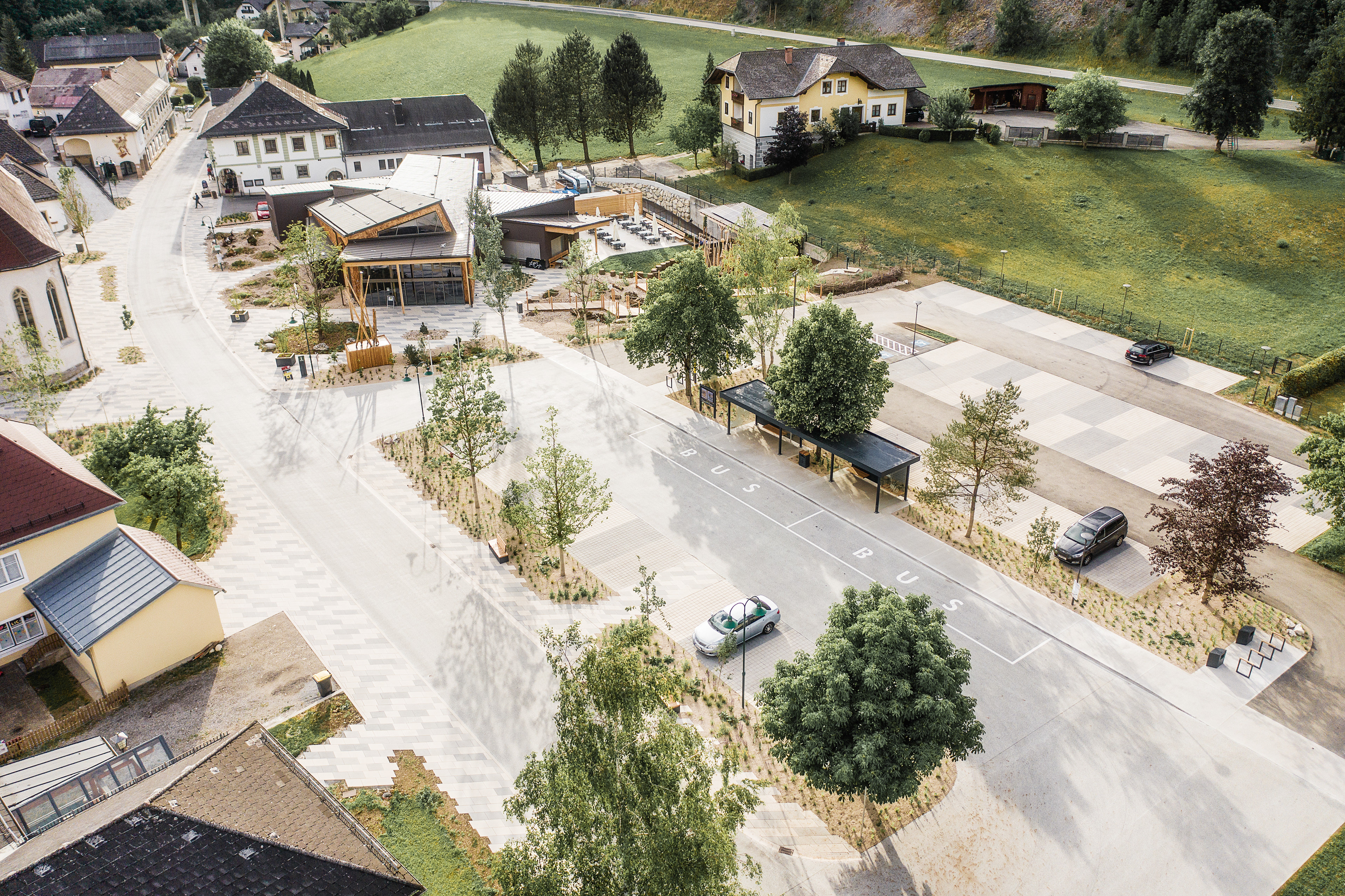
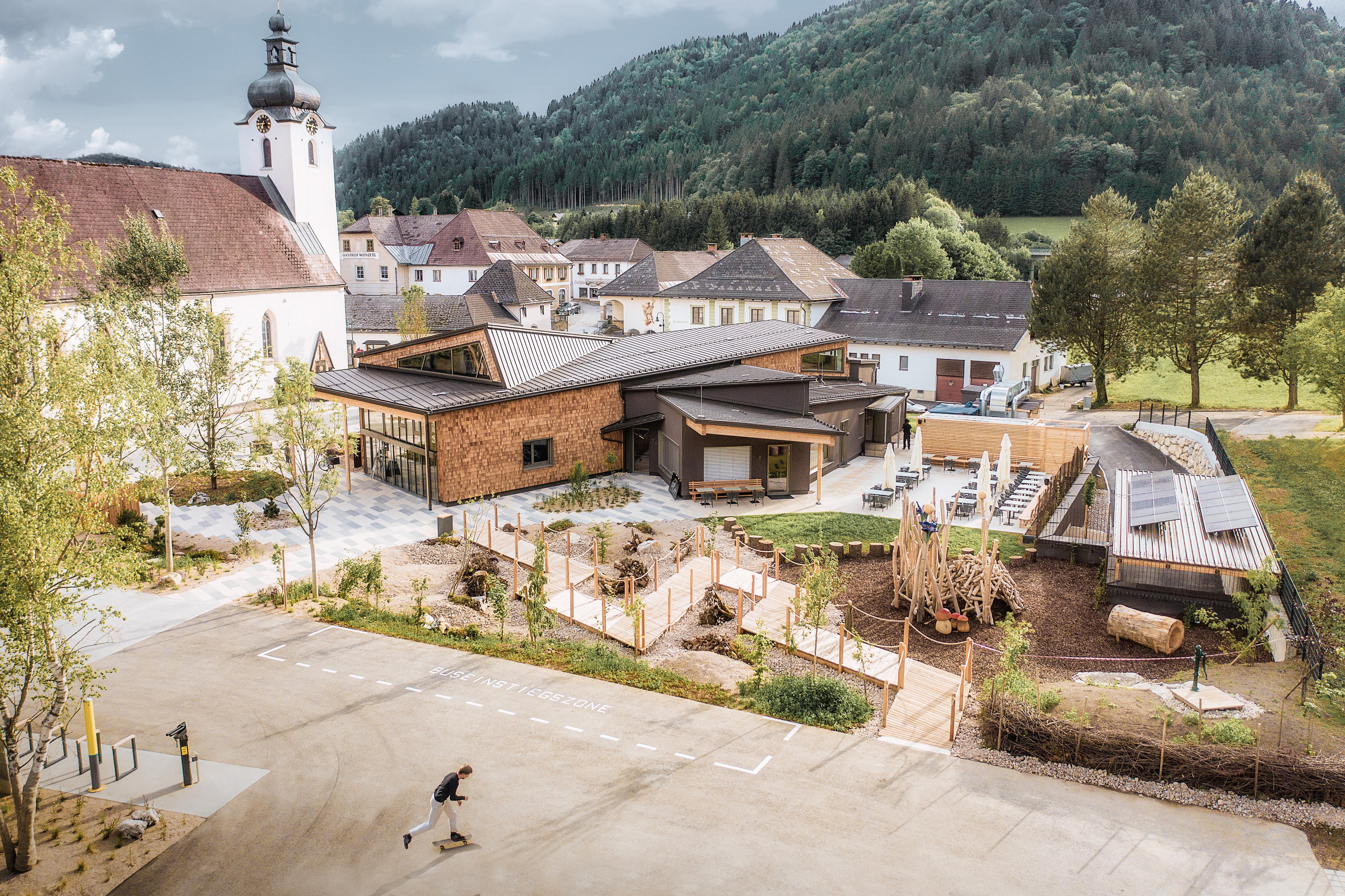
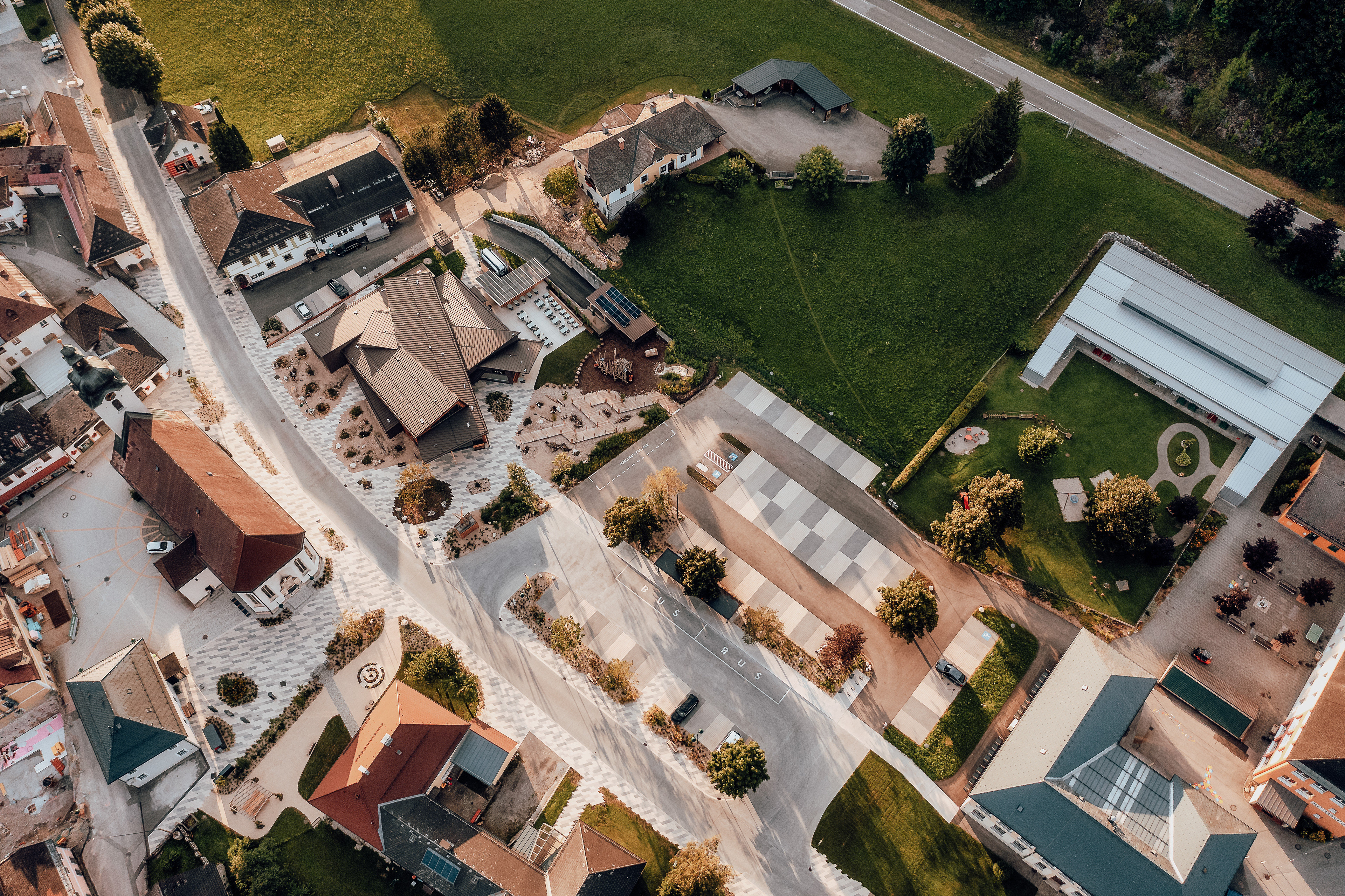
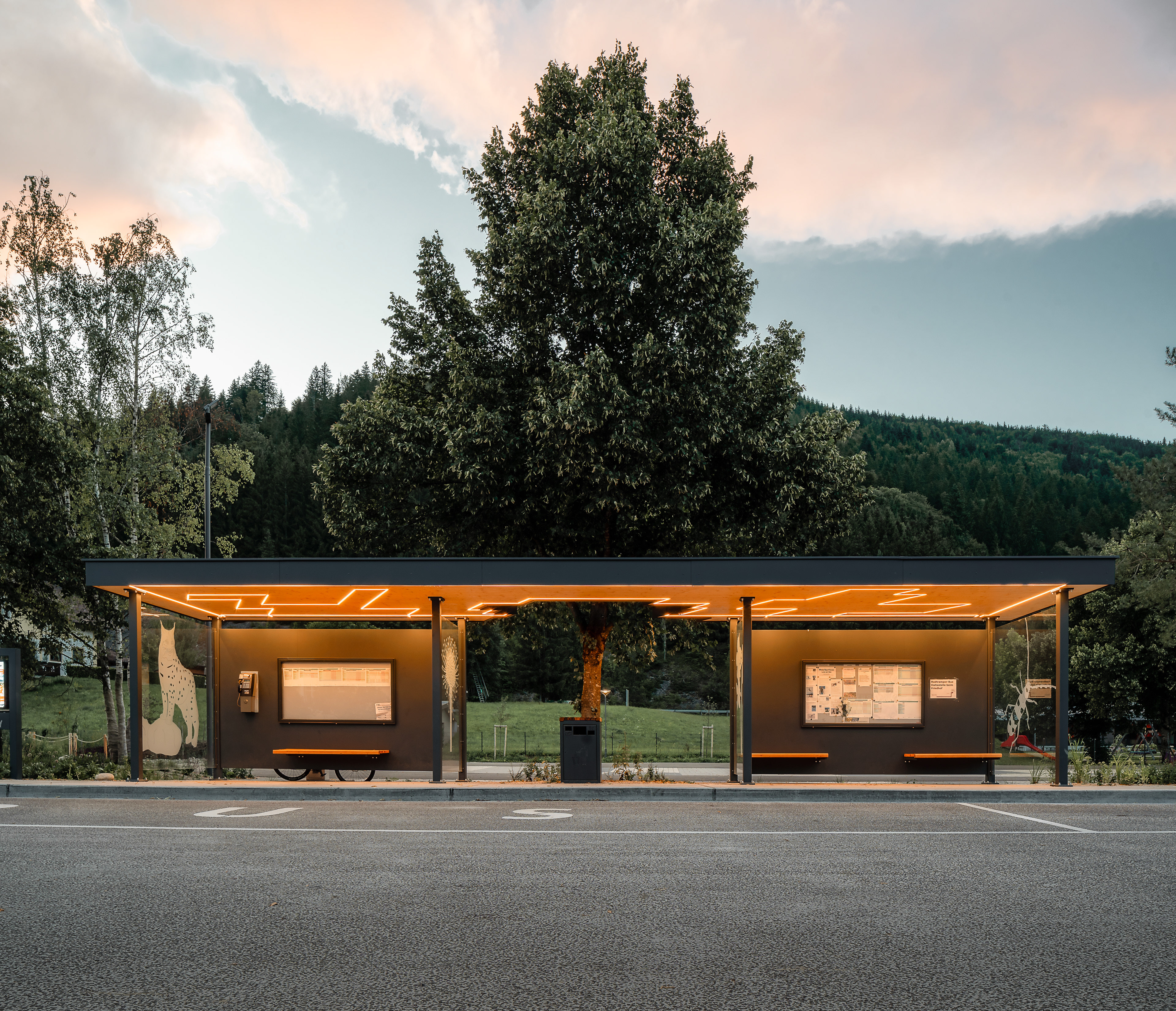
Die Belebungszone Lunz am See will einen funktionierenden Freiraum bieten, der durch verkehrsberuhigende Maßnahmen alle Verkehrsteilnehmer auf eine Stufe stellt. Sie soll die Integration des "Haus der Wildnis" mit dem Ortszentrum und dem Kirchenplatz schaffen. Sie optimiert den Parkplatzbereich zwischen Weltnaturerbezentrum und Schule und trägt wesentlich zur Attraktivierung des Ortskernes durch Gestaltungsmaßnahmen bei (Freiraummöblierung, Grünraumgestaltung, Obeflächengestaltung).
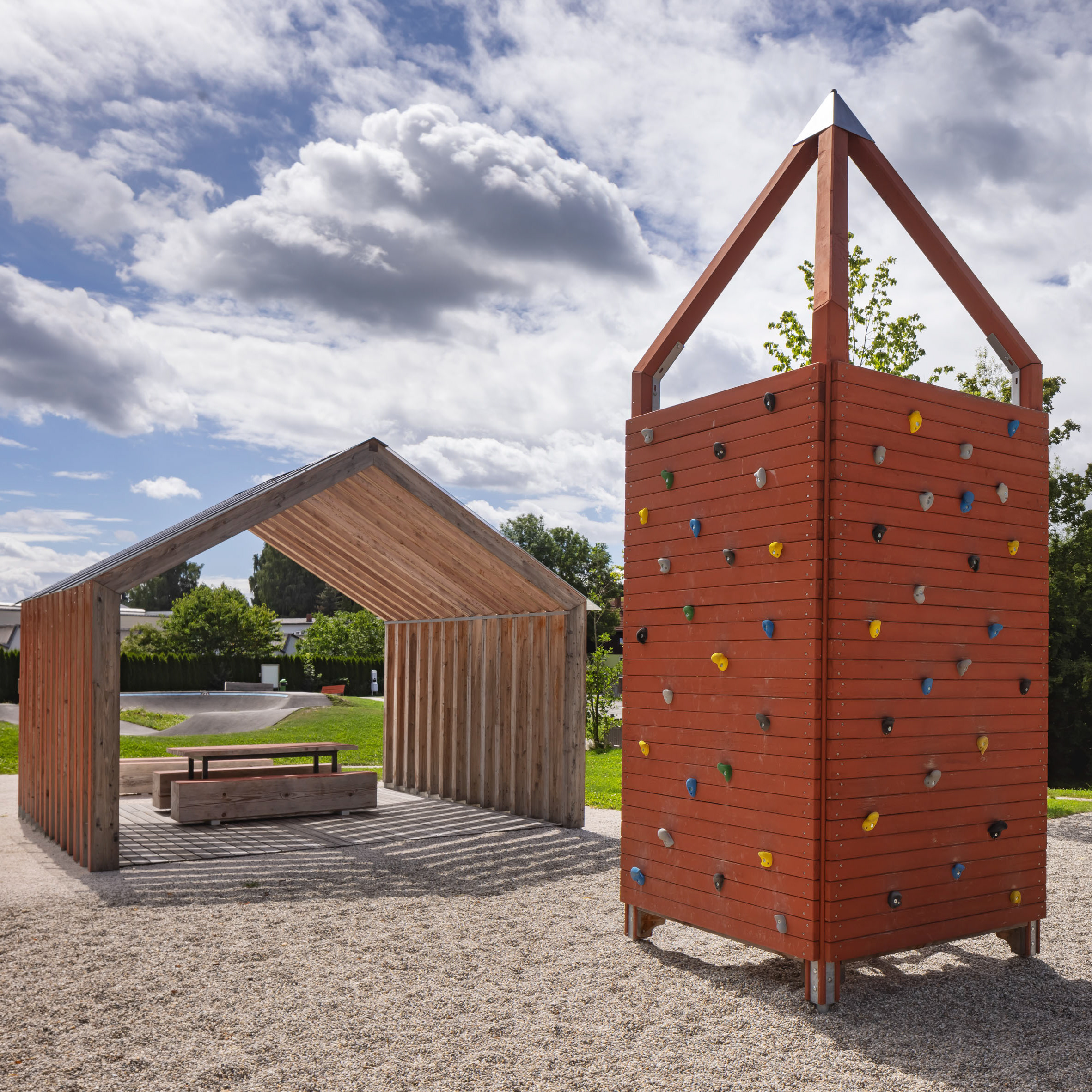
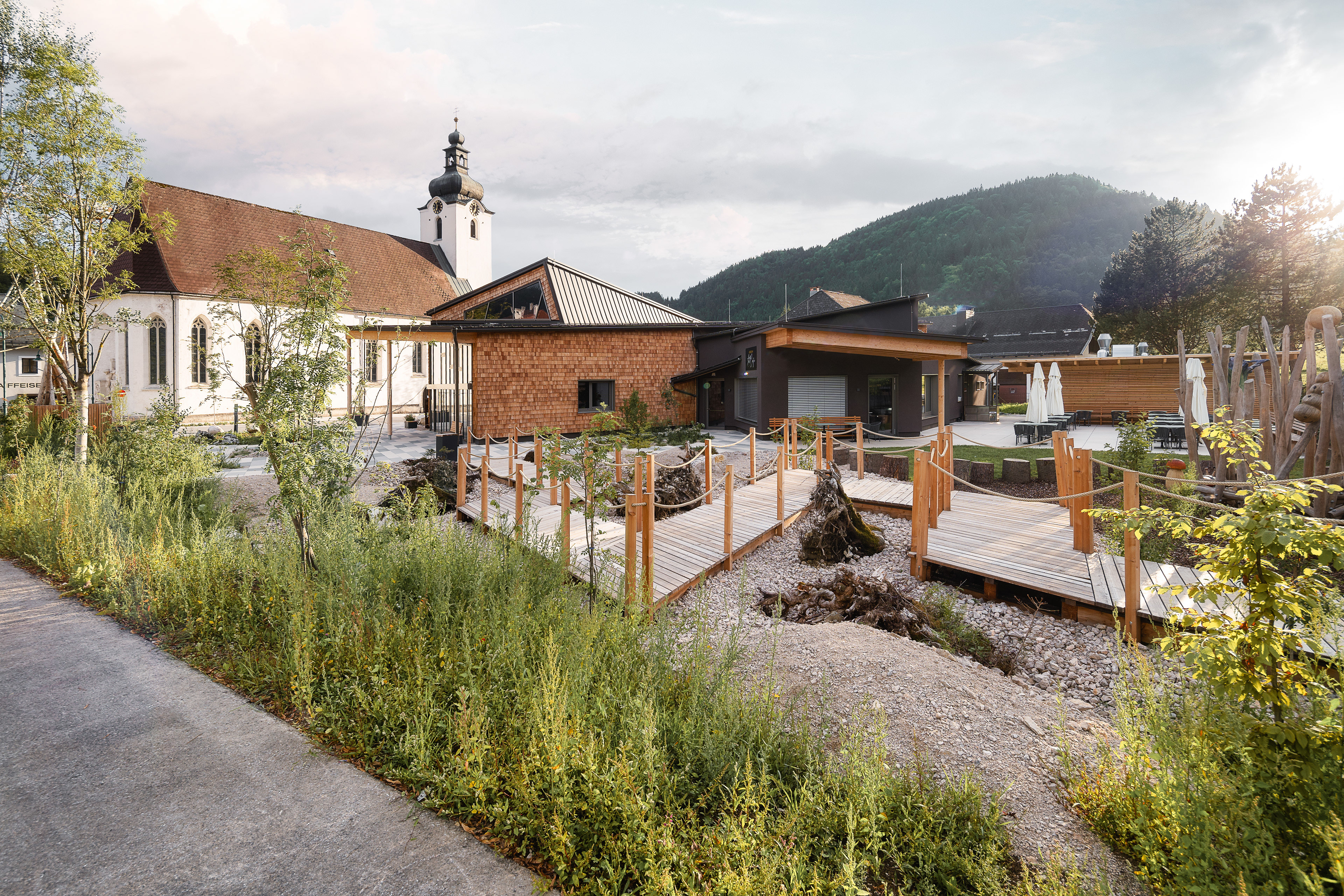
Ziel für die Planung des Freiraums für das Weltnaturerbezentrum war die Darstellung der Prozesshaftigkeit von Natur. Der natürliche Kreislauf der im Wildnisgebiet Dürnstein aktiv betrieben wird, nämlich die Eingriffe des Menschen bis auf ein Minimum zu beschränken, ist einzigartig in Österreich. Dies ausreichend mittels Zentrum in häuslicher Form außerhalb des Wildnisgebiets zu würdigen, soll auch im Freiraum rund um das Weltnaturerbezentrum spürbar werden. Modulhaft werden Landschaftssysteme des Gebiets wie Totholzansammlungen und benachbarte Pflanzenbiotope, Berglandschaften, Wasserlandschaften, Pilz- und Sporenansammlungen an Stämmen und Moorlandschaften exemplarisch in einem Mosaik vor dem Zentrum dargestellt, um den Besuchern die Landschaftsprozesse im Wildnisgebiet näher zu bringen. Für Kinder soll das Schutzgebiet spielerisch zu erkunden sein. Ein Totholzkletterwald, eine zu erklimmende Berglandschaft und makroerlebnispädagogisch, der Gang des Borkenkäfers in einem Stamm, ermöglichen den Kindern einen greifbaren Zugang. Die Vegetation orientiert sich an heimischen Gehölzen und Stauden, die auch im Schutzgebiet zu finden sind und soll Schmetterlinge und auch andere Insekten anlocken.
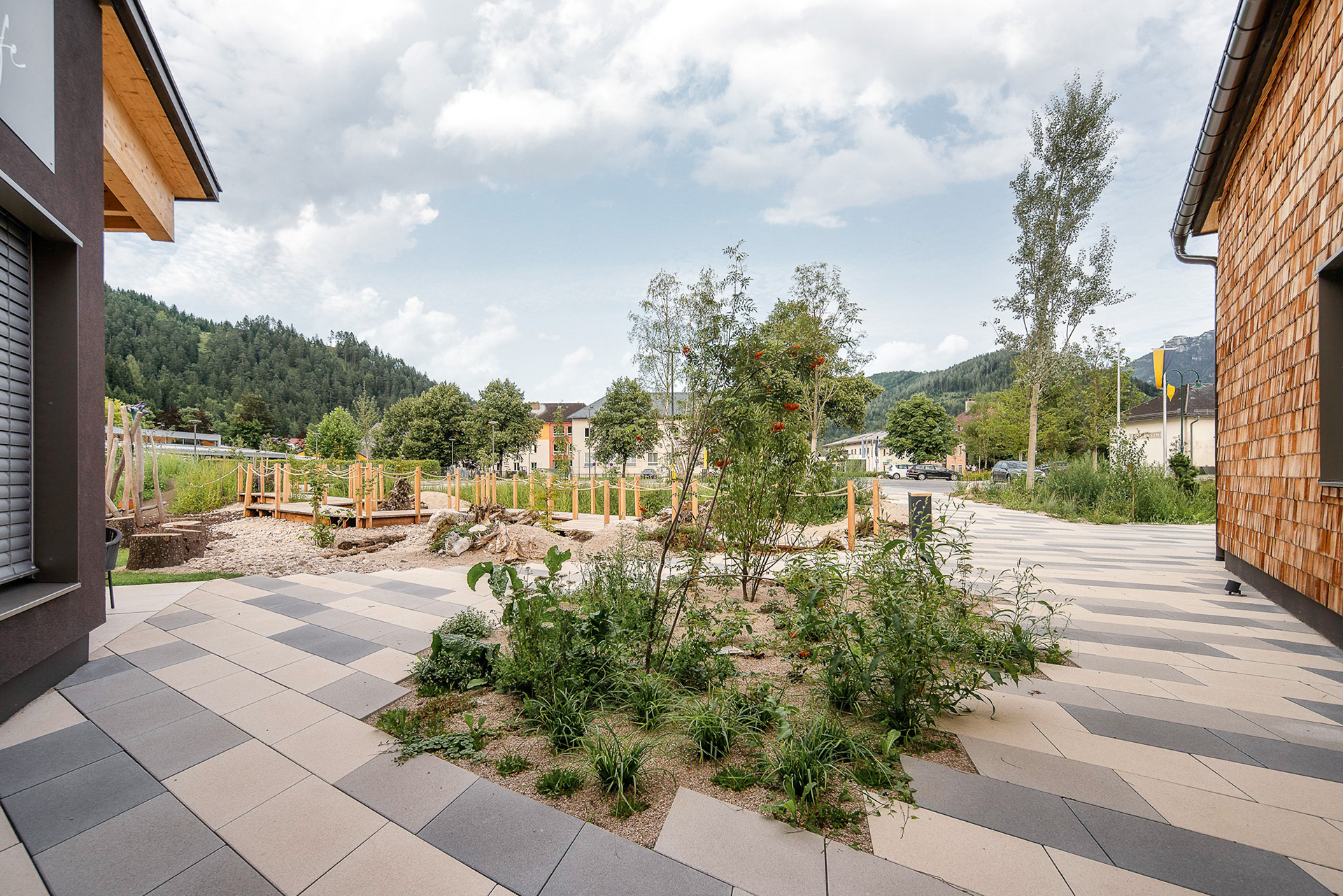
Ausgehend vom Konzept des Freiraums für das Weltnaturerbezentrum in dem, wie schon oben beschrieben, die Prozesshaftigkeit von Natur dargestellt wird, spannt sich das Grünraumkonzept auch über den Straßenraum und den Kirchenplatz. Die symbolhaften Schichten der alpinen Umgebung werden aufgebrochen durch Grüninseln. Stauden- /Gräserbeete wurden rund um fahrbahnbegleitende Laubbäume angelegt und betreuungsextensiv gepflanzt. Die Laubbäume spenden Schatten, bringen mehr Grün ins Zentrum und werten das Kleinklima auf. Die Hauptfahrbahn der Landesstraße wurde mit einem neuen Belag (Halbstarre Decke) versehen (Aufdopplung), der barrierefrei in straßenbegleitende Pflasterflächen übergeht. Die „Schichtpflasterung“ bildet den Rahmen, der aus verschiedenen Graufarbtönen besteht und das Schichtgestein der umgebenden Bergwelt abbildet.
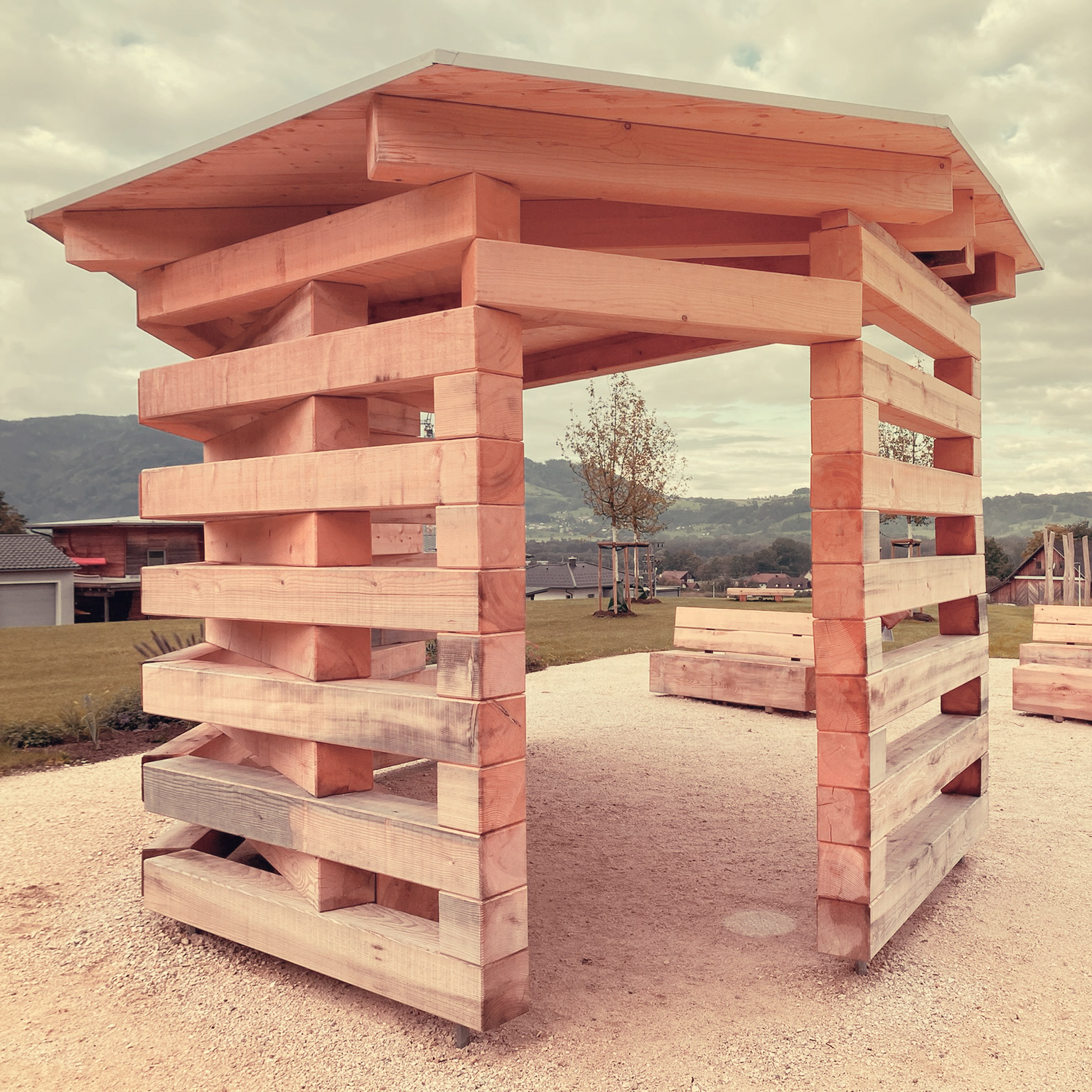
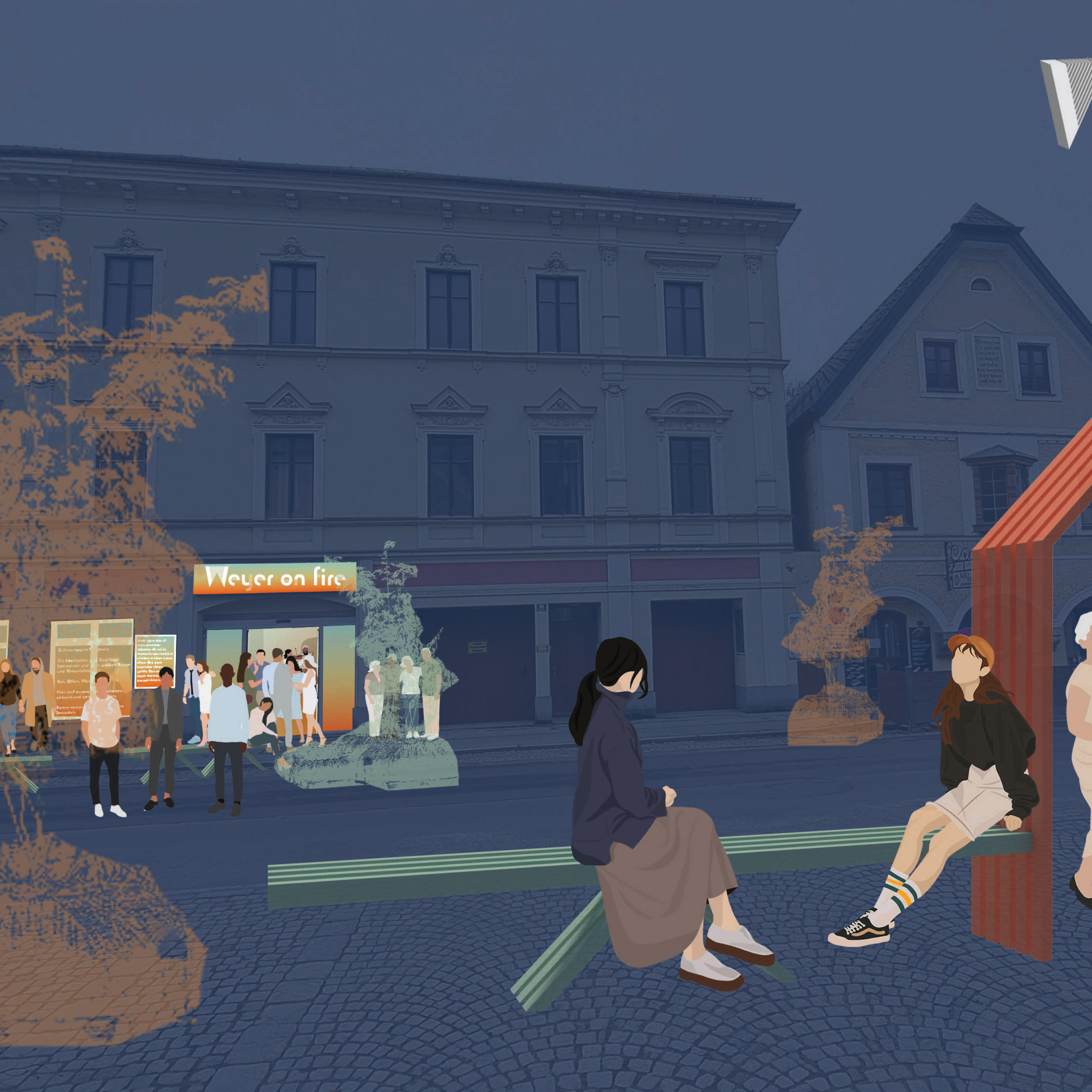
Grüninseln gliedern die Verkehrsräume und entschleunigen so den Verkehr. Der multifunktionelle Parkplatz zwischen Haus der Wildnis und Schule wurde umgestaltet und erweitert. Niederschlagswasser wird hier unter anderem in versickerungsfähigen Stellplätzen und randlichen Grünflächen versickert und zurückgehalten. Großzügigere Gehbereiche im Bereich der Lüftleckmündung, der Kirche, im Bereich vor dem Weltnaturerbezentrums, vor der Schule und vor dem PP-Bereich geben dem Ortszentrum symbolhaft seine Bedeutung zurück. Die Öffnung zu allen Teilräumen hin ermöglicht eine durchgehende Vernetzung der Belebungszone im Ortszentrum sowie eine Optimierung der Erreichbarkeit örtlicher Geschäftslokale. Die Aufenthaltsqualität im Ortszentrum wird ganz wesentlich durch die Kombination Grünräume und Freiraummöblierung verbessert.
The activation zone of Lunz am See aims to provide a functioning open space that, through traffic-calming measures, places all road users on an equal footing. It is intended to achieve the integration of the "Haus der Wildnis" with the town centre and the church square. It optimises the parking area between the World Natural Heritage centre and the school and contributes substantially to making the town core more attractive through design measures (open-space furnishings, green-space design, surface design).
The aim in planning the open space for the World Natural Heritage centre was to portray the processual nature of nature. The natural cycle that is actively pursued in the Dürrenstein wilderness area — namely, restricting human intervention to a minimum — is unique in Austria. Honouring this adequately by means of a centre in built form outside the wilderness area is also intended to become palpable in the open space around the World Natural Heritage centre. In modular fashion, landscape systems of the area — such as deadwood accumulations and neighbouring plant biotopes, mountain landscapes, water landscapes, fungal and spore accumulations on trunks, and bog landscapes — are portrayed exemplarily in a mosaic in front of the centre, in order to bring the landscape processes of the wilderness area closer to visitors. For children, the protected area is meant to be explorable in a playful way. A deadwood climbing forest, a mountain landscape to be scaled, and — in a macro-experiential-educational manner — the path of the bark beetle within a trunk give children a tangible point of access. The vegetation is oriented towards native woody plants and perennials that are also found in the protected area and is intended to attract butterflies as well as other insects.
Proceeding from the concept of the open space for the World Natural Heritage centre, in which, as described above, the processual nature of nature is portrayed, the green-space concept also spans the street space and the church square. The symbolic layers of the alpine surroundings are broken up by green islands. Perennial and grass beds were laid out around the deciduous trees lining the carriageway and planted for low-maintenance care. The deciduous trees provide shade, bring more greenery into the centre, and enhance the microclimate. The main carriageway of the provincial road was given a new surface (a semi-rigid pavement) as an overlay, which transitions barrier-free into the paved areas alongside the road. The "layered paving" forms the frame, consisting of various shades of grey and depicting the stratified rock of the surrounding mountain world.
Green islands structure the traffic spaces and thereby slow the traffic. The multifunctional parking area between the Haus der Wildnis and the school was redesigned and enlarged. Precipitation water is infiltrated and retained here, among other means, in permeable parking spaces and peripheral green areas. More generous walking areas in the area of the Lüftleck confluence, the church, the area in front of the World Natural Heritage centre, in front of the school, and in front of the parking area symbolically restore to the town centre its significance. The opening towards all the sub-spaces enables a continuous interconnection of the activation zone in the town centre as well as an optimisation of the accessibility of local business premises. The quality of stay in the town centre is substantially improved by the combination of green spaces and open-space furnishings.